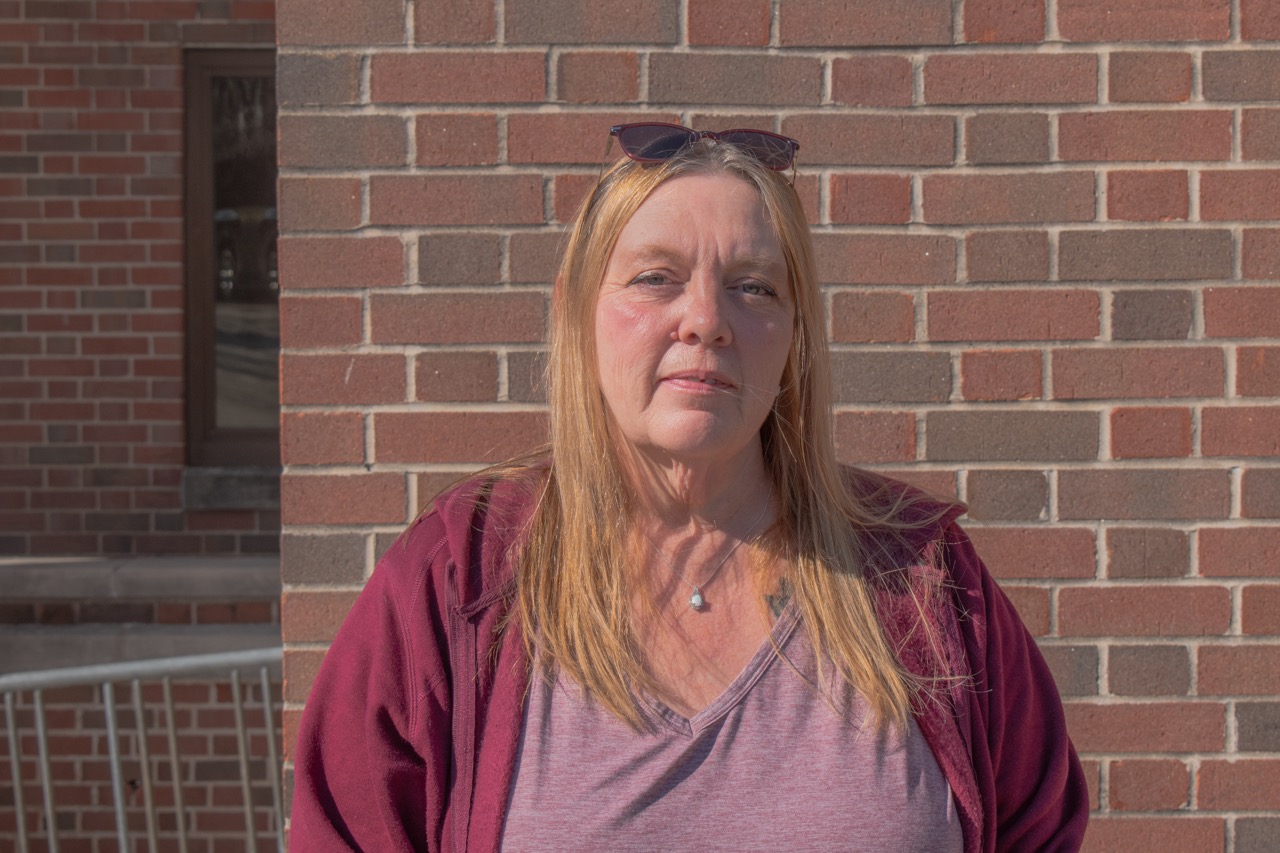
Interview with Tracie McGee, 2026
This work is licensed under CC BY-NC 4.0


You may adapt, copy, and redistribute this material in any medium or format for noncommercial purposes, but you must credit the contributor(s) and Cementland Archive, include the above license information, and indicate if changes were made.

NO ALTERATION
02.13.26
Baden Branch of the St. Louis Public Library, St. Louis City, MO
Edited by Danya Gerasimova
Tracie McGee's family has lived in Riverview by the Missouri Portland Cementland Factory and later Cementland since the 1940s.
Danya Gerasimova:
Could you share a little about yourself and your connection to the area?
Tracie McGee:
My name is Tracie McGee. My family has been down on Leeton Avenue for five generations. My grandparents, Leona and Laney Yates, came to St. Louis from Kentucky around the late 1940s so [my grandfather] could get work here. They lived on Leeton. My mom was one of eight children, and they were all born in the house on Leeton except for one, who was born at the hospital.
Danya Gerasimova:
Do you know what year your grandparents came to St. Louis?
Tracie McGee:
My mom was born in 1950, and she was the fifth child. So that's why I'm thinking it was in the 1940s, because I believe they were all born in St. Louis. The house that I live in now is not the house where they were born. The house where they were born burned down years ago.
There were a lot more houses on Leeton than there are now. When I was younger, every single house was full. It was a very active street. Ever since I can remember, Leeton [has been populated by] lower-income families. I remember all of the white people lived down by [the side of Leeton meeting] West Avenue, and all of the Black people lived up by Lilac Drive. But everyone got along well. Everyone supported each other. It was a wonderful street. I do remember stories that there was a Black church and a white church. And there was a white store called Gingers, and then there was one for the Black people. I remember my grandma always liked going to the Black church better than the white church because she liked their music.
I just remember that there were so many children [on Leeton.] Now, unfortunately, everyone has moved out. The houses have been abandoned, and there are very few people who live on Leeton. But it's still home. I'm not planning on going anywhere.
Danya Gerasimova:
So you grew up on Leeton?
Tracie McGee:
I did not grow up on Leeton. I was raised in Belfontaine Neighbors, not too far from there. My grandmother owned a house [on Leeton] while I was growing up, so we would visit frequently. They owned quite a bit of property. There was the Yates, which was my family, and there was the Johnsons. My grandma Rudy [Rudell Etkins] would try to buy a lot of properties for whatever reason. The Johnsons would also buy properties. I don't know what their plans were, but they eventually passed away, and the properties were dispersed amongst family members or sold off.
I've always been part of Leeton, and I do live there now. I moved to Leeton about 20 years ago. I lived in a two-story house that belonged to the Barkers. I rented the second story. That house was eventually demolished; we bought the property, and now it's just part of my yard. I also lived at two other properties on Leeton. But I've been at the house I'm in now for about 20 years.
The house I live in is a three-room shotgun house. We walk in the front door, into the living room, then the bedroom, then a small hallway with the bathroom, then the kitchen, and then the back door. And the light switch is on the back wall by the back door. In most houses, you come through the front door, and there is a light switch. Well, we got that in the front room, but then you have to walk across the bedroom to get to the second light switch, and across the kitchen to the back door to get to the other light switch. I was told, and I don't know how true this is, that the houses on Leeton were built for workers at the cement plant. So they would cut through from Scranton Avenue and come in through the back doors, and that's why the light switch is on the back wall.
Danya Gerasimova:
Did your grandfather work at the cement factory, or did he just live nearby?
Tracie McGee:
I was under the impression that he worked at the cement factory, but I found out later that he actually worked at CertainTeed on St. Cyr Road between Scranton and Bellefontaine Road.
Danya Gerasimova:
Got it. Did you feel like that whole cul-de-sac, including Scranton, West, and Leeton, was a single community, or did it feel separated?
Tracie McGee:
It definitely [felt like] one whole community, yes. One big family. Everyone knew everyone, and you couldn't get away with anything because everybody knew everybody.
Danya Gerasimova:
Did the cul-de-sac feel connected to the larger Riverview community?
Tracie McGee:
It felt like its own thing. Of course we were connected to Riverview, but we're up against a little wooded area and off to the side. If somebody drove down the street on Leeton, they either knew somebody down there, belonged there, lived there, or were lost. That little block there was definitely a special little part of Riverview. We all knew everybody in Riverview, [but the cul-de-sac] was kind of off by itself.
Danya Gerasimova:
This area is also located by the city / county line. Does the city / county border play into your day-to-day life in any way? Is there anything strange about being right on that border?
Tracie McGee:
Not in particular. Not to me, no. Half of St. Cyr is in Bellefontaine Neighbors, and half is in Riverview. Part of Scranton is in Riverview, and then part of Scranton is in the city [of St. Louis]. So to me, that didn't play any role in anything growing up.
Danya Gerasimova:
Do you feel like the same community continues across the St. Louis city / county line, or do you feel like there is a boundary?
Tracie McGee:
I feel like there is sort of a boundary there. Yeah, definitely. I didn't really venture down that way much when I was younger, except for the boat docks. The young people would go hang out at the boat docks before [the road] was even paved. It was still all gravel.
Danya Gerasimova:
Where was that? Closer to the Chain of Rocks Bridge?
Tracie McGee:
Yes. There are two boat landings. If you go across Riverview Drive from Scranton, there's a little park there with restrooms. We always called that the Small River. There is a bike trail now that goes along the banks of the river, and it goes down to the boat landings. That is down by Riverview and Valley Drive, maybe. That's where you can put your boats in the river and everything. So we called that the Big River. Now it's all paved. We'd go hang out at the Big River. All the teens would meet up and hang out there.
Danya Gerasimova:
Did you know anyone who lived in the cul-de-sac and worked at the factory?
Tracie McGee:
I don't remember. I honestly don't even remember the cement company being active. I just remember the stories. I remember the elders saying that when it was up and running, there would be a lot of cement dust on the cars and the houses. They would get up in the mornings and have to wipe everything down. But I personally don't remember that part. I was just too young.
Danya Gerasimova:
The parcel map you shared has the names of local homeowners labeled. I wonder how many of the residents were renting instead, especially in those houses that are labeled as owned by the factory.
Tracie McGee:
Right. I don't know if the parcels of land [where the map says] Portland Cement were actually houses or if they were just land. I do remember that when I was younger, there were some vacant fields on the Scranton side. It might have just been that they owned that property without homes on it, for whatever reason.
Danya Gerasimova:
I'm really curious to hear anything more you might know about the original Black community on Leeton. I've only recently found out about that history through other interviews. As you know, the Riverview and Bellefontaine Neighbors areas were pretty much all white and very homogeneous until the 90s. So it was interesting to learn that there was a Black community in the midst of that for a long time.
Tracie McGee:
They all moved on, unfortunately. The last Black family that was down there was the Peeples, and they were deeply rooted there. I haven't heard anything about that family in quite a few years. I'm not sure if any of them worked at the cement plant. Like I said, I just mostly visited down there as a child, but I didn't hang around. Honestly, my dad said it was kind of rough down there, so I didn't get to hang out a lot when I was really young.
But I know that all the children played together. It didn't matter if they were Black or white. We were all just kids. We didn't see that part. I just know that Black people lived down on one end, and the white people on the other for whatever reason. I don't know what that reason was. That's about all I remember.
Danya Gerasimova:
In a previous interview, someone mentioned to me that there used to be a segregated Black only school called Turner nearby. Do you remember that building?
Tracie McGee:
I don't remember anything about it being a school for Black students. I would have to check with family, but I'm almost positive that one of my uncles went there because it was also for what we would now call special needs children. I do remember that people called the children who went there “Turner learners.” It was probably not a nice statement, from what I can tell, because they were "slow." I'm pretty sure that one of my uncles went there, and he was kind of bad. I don't know if [he was there] for special needs or if it was behavioral issues.
And then [that building] was bought by some man who had a chemical plant there.
Danya Gerasimova:
Maclan Industries. Yeah.
Tracie McGee:
That was it.
We also had the quarry down there. I never did know what the quarry was about. All I know is they had cool rocks to climb on.
Danya Gerasimova:
Oh yeah? Did you hang out there as kids?
Tracie McGee:
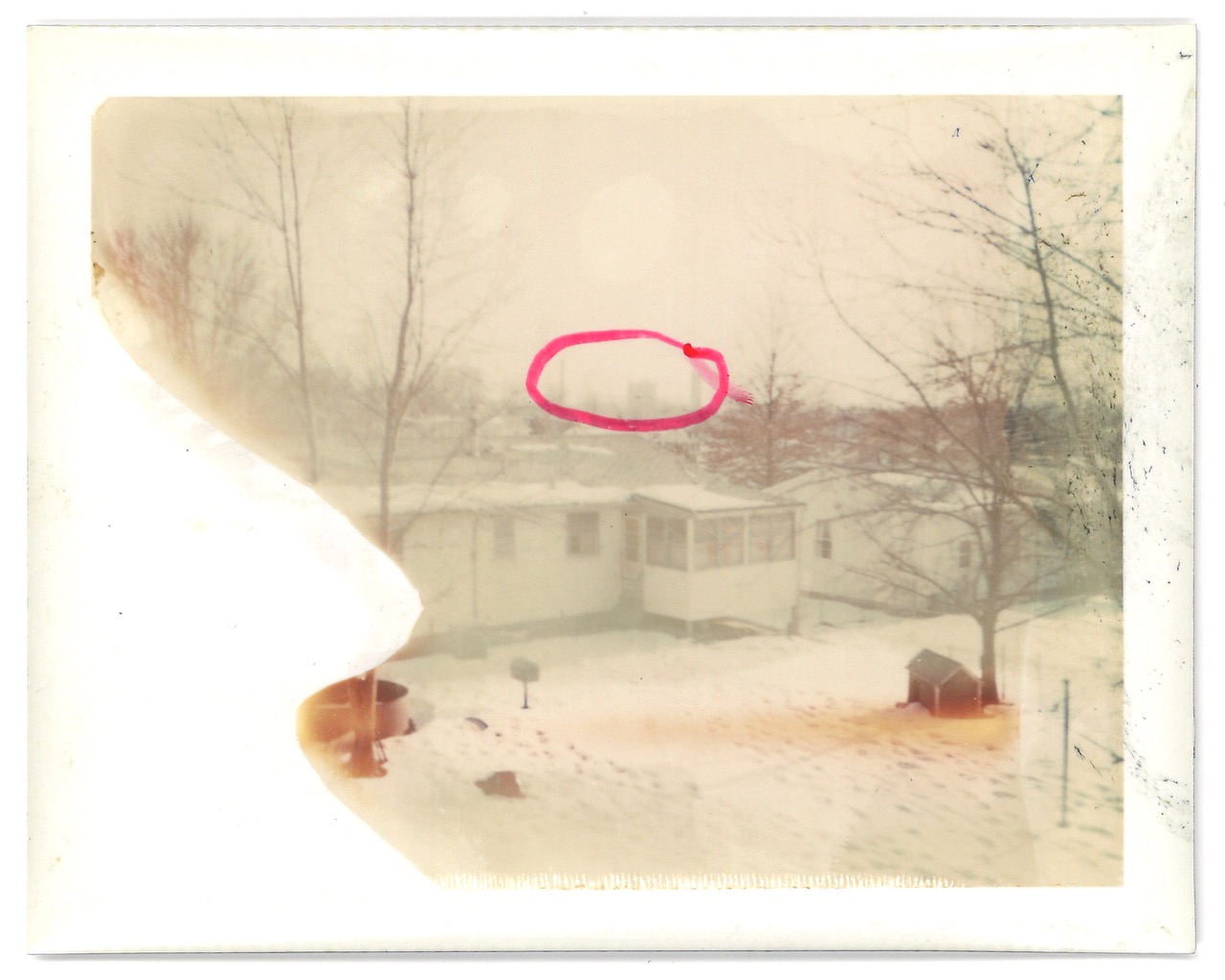
I never went to the quarry. I never even went into Cementland like all the other kids in the neighborhood did. I've watched a lot of videos, and it does look really cool inside. I don't know why I’ve never ventured that way. It's just always been the big tower looming over the property. I always think, boy, if that thing ever has to come down… These properties have had it. It doesn't take much to shake the houses. They're old. [When the] train goes by, the house shakes a little bit.
Danya Gerasimova:
Imagine the level of asbestos coating at Cementland too. If they demolish it in the future…
Tracie McGee:
I don't know how they would contain that [asbestos released into the air.] Yeah. It's a shame that Bob died. He was going to make something of it. It was exciting. I heard that a gentleman who owned multiple properties down here kept buying up all of these properties because he thought that whatever became of Cementland, somebody would buy that little block to use for parking. But he passed away as well.
Danya Gerasimova:
Interesting. Do you know who that would be?
Tracie McGee:
Paul.. something.
Danya Gerasimova:
Not Paul McKee, right?
Tracie McGee:
It wasn't McKee. But yeah, he kept buying up properties for back taxes, and he would just store stuff in his properties. He didn't even live there. He just kept buying them, and he would be there every day, just kind of puttering around.
Danya Gerasimova:
Were you nervous about his plan? I'm assuming if someone was to buy those places for a parking lot, they would tear the houses down.
Tracie McGee:
Correct. I wasn't nervous necessarily, just kind of curious as to what was going to come of it.
Danya Gerasimova:
Were you living on Leeton by the time Cassilly started working on Cementland?
Tracie McGee:
Yes.
Danya Gerasimova:
What did you think about Cementland in general?
Tracie McGee:
I thought it was wonderful. I love [Cassilly's] work. I love his ideas, repurposing different materials and everything. It's out of the norm. He was just so creative. I know everyone kind of looked at things and thought, "What is that man doing?" But he was definitely an artist.
I thought it was just great that somebody would take an interest in Cementland at all. So yeah, it was exciting to me. Even if it meant that they were going to buy out the properties on Leeton, that would have been fine, because it would bring life back into the area. I was good with it.
Danya Gerasimova:
What kind of effect do you think Cementland would have had on the area had it been completed?
Tracie McGee:
I think it would have been really good for the area, because a lot of people don't know about Riverview anymore, unless they hear something negative on the news. I thought it would have been really positive for us, something that we had never seen in that area before. I was looking forward to it.
Danya Gerasimova:
So the Portland Cement factory shut down in 1981, and then Bob Cassily started working on it in 2000. Did you notice the factory and the quarry much in the '90s? Was it a presence in the area in any way?
Tracie McGee:
So in that period of time, I think it just fell by the wayside. Nobody thought about it. It was just there. I don't remember anybody having any real discussions about what was going to happen with it. I remember that it was where a lot of teenagers would sneak off and adventure to see what was going on inside. I stayed away from there because it was dangerous. I thought somebody was going to get hurt. At that time, I was probably in my early 20s, and I was busy. I had moved away for a little while and had a family. I just didn't think much of it, and I didn't hear anything of it.
Danya Gerasimova:
When Bob Cassily and his crew were working on it, did you ever see them driving around or working?
Tracie McGee:
I can remember hearing the trucks bringing in loads of dirt. Yeah, I can remember hearing a lot of stuff going on over there. I always wondered what was going on.
Danya Gerasimova:
Did Bob Cassilly ever try to talk to the neighbors or invite you to a town hall, anything like that?
Tracie McGee:
Not that I know of.
Danya Gerasimova:
Did you receive any communications from his crew at all?
Tracie McGee:
No, no, I didn't.
Danya Gerasimova:
Got it. So Cementland has been shut down since 2011 and has been sitting vacant—
Tracie McGee:
I remember the morning that they found Bob. I can remember all the police cars and emergency vehicles. It was pretty devastating to find out that it had happened right down the street and that he was alone. It was upsetting to know that the project ended in such a horrible way. I was hoping that somebody would pick it up and continue on with the dream he had for Cementland, but it doesn't look like that will happen.
Danya Gerasimova:
Yeah. Of course, tons of people continue sneaking into Cementland all the time. Do you ever see those people? Do you run into people going to Cementland?
Tracie McGee:
Oh gosh, yes. We have kids parking all the time. At first we would chase them off. We'd be like, "Hey, you can't park there!” because we didn't know what they were doing. But now I'm like, "Oh, they're just going over to see Cementland."
But the mayor of Riverview lived right across from me, and he put up signs saying no parking. He was really hard on people going over there, which I understand. It is dangerous, but it don't bother me at all. I mean, whenever I see a group of kids with their little backpacks and whatnot, I'm like, "I know where you're going. Have fun. Be careful."
Danya Gerasimova:
Right. Have there ever been situations with people going to Cementland that have been a nuisance to the community?
Tracie McGee:
As far as I'm concerned, they haven't been a nuisance, no, because they aren't concerned with going into properties around the area. They're just curious about what's inside there, and they want to explore. I've seen the videos and pictures, and I'm like, "Well, that is pretty cool. I get it." So there's no concern for me. Some of the older neighbors fuss about it, but they're going to fuss about everything because they're older.
Danya Gerasimova:
Are stray dogs at Cementland an issue?
Tracie McGee:
So that is a big problem with our area, especially since there are so few families living on that block now. There are a lot of people who like to dump animals down there. It's a regular thing. In fact, one of my dogs got dumped down there, and I just kept it. I have a lady from Stray Rescue that I call regularly to come get dogs that have been dumped there. It's really sad. There isn’t a lot of people to witness what they're doing.
The same thing goes for the trash. The trash was a very big problem, because in order to have anyone come over, they have to drive up either St. Cyr or Scranton. And St. Cyr is nothing but a dumping ground for trash. Same thing at Scranton and Riverview Drive. So it's kind of sad when you drive in, but I believe it's because it's such a secluded area.
There are also a lot of gunshots because there's nobody around. There are a lot of people who drive through shooting guns.
Danya Gerasimova:
Is it on Scranton usually?
Tracie McGee:
Yes. They'll go up Scranton, and late at night, you hear a lot of gunshots. And I'm guessing they're driving by in cars, shooting. I'm pretty used to it now.
Danya Gerasimova:
I know there have unfortunately been incidents of horrific violence at Cementland too. In 2022, a woman named Daisa Allen was found murdered there.
Tracie McGee:
That was horrible.
Danya Gerasimova:
Do you remember that?
Tracie McGee:
I do. I remember that they were looking for her, and somehow they knew to look there. I don't know the details of the story, but they found her there. That was very sad. That's always a concern of mine, because in nice weather, I like to walk every day—especially in the summer months when I don't have to work. I like to walk when the sun first comes up. Once I get around the corner at Lilac and Scranton, I become a little nervous, because there's only one family that lives on Scranton.
Out of all the houses there, only one house is legally occupied. A lot of squatters go into the houses down there, but there's only one legal occupant on that street. When I walk down Scranton from Lilac, I become very alert to my surroundings. I don't want to stop walking around my own block, but it does make me nervous. I make sure I have my phone in my hand, ready to dial at any time.
But it's definitely different now than when I was growing up. Like I said, it was a very vibrant, family-oriented area on that block. Every house was occupied with families and children, people in their yards. And now it's just kind of there. But I've noticed some people are trying to rehab a few of the houses. Right on West and Scranton, there's a two-story white house that used to belong to the Understalls. A gentleman bought it, rehabbed the whole thing, and sold it recently. Now there are renters there. He did a wonderful job with it.
Danya Gerasimova:
So Cementland is now owned by Beelman Trucking, a trucking company. Are they a big presence in the area? It seems like they have a few facilities around here.
Tracie McGee:
I am really glad that they bought it, because they did some cleanup around there. People were beginning to dump trash at one of their driveways. They got that all cleaned up and got some nice fencing put up. I believe just having it being occupied deters some of the issues that we're having with dumping trash and criminal activity. When I get up and go to work, it's 4:30 in the morning and it's dark, but it's nice to see the trucks going in and out of the trucking company. There's movement.
Danya Gerasimova:
If money were no object, what would you like to see done with the Cementland property that would be of value to the community?
Tracie McGee:
If money weren't an issue, I would like for Bob Cassilly's dream to be brought to life. That's what I would like to see, or something to that effect. I don't know what else you would do with that property besides demolish everything. I know that would be a huge undertaking and a huge risk as far as the asbestos and everything. His project would be a wonderful thing for that area.
Danya Gerasimova:
Is there anything you would like to share that I haven't asked about?
Tracie McGee:
All I know is [this neighborhood] has been a huge part of my life, and I hope that Riverview comes together and makes it through everything that's going on as far as our mayor and our city hall.
I wish [Riverview] were still a village instead of a city, but we are now a city. I just would like for it to stay Riverview. I'm hoping that we can avoid being dissolved and taken over by the county.
Danya Gerasimova:
What difference do you think that would make? What's the significance of having a local municipal government for this area?
Tracie McGee:
I feel that we have more control over what happens. [If Riverview was taken over by the] county, we would just shrink into the background. This county is so huge.
And I would like to see more families in the area. It would be really nice to see it come to life again. I think a lot of the houses are now owned by companies that rent houses. People just don't take as much pride in their homes when they're renting for some reason. So it would be nice if there were more homeowners. If we had more affordable ways to buy homes in the area, there would be homeowners.
.jpg)
.jpg)