Interview with Andrew Russek, 2025
This work is licensed under CC BY-NC 4.0


You may adapt, copy, and redistribute this material in any medium or format for noncommercial purposes, but you must credit the contributor(s) and Cementland Archive, include the above license information, and indicate if changes were made.


NO ALTERATION
06.10.25
Java Plus Cafe in downtown St. Louis, MO
Conversation with Danya Gerasimova
Edited by Danya Gerasimova

Andrew Russek is a defense attorney and a former City of St. Louis prosecutor. As of 2026, Andrew heads the Russek Law Group [Updated 10.07.2026 at Andrew Russek's request].
Danya Gerasimova:
Can you talk a little about yourself and your background?
Andrew Russek:
My name is Andrew Russek. I'm a defense attorney for Combs Waterkotte right now. I've been there for about a year. Prior to that, I was a violent crime prosecutor in the City of St. Louis Circuit Attorney's Office. Before that, I was a public defender in rural Missouri. I live here in St. Louis. Four kids, a wife.
Danya Gerasimova:
How does Missouri law define trespassing?
Andrew Russek:
Trespass in Missouri is being on real property, which does have a legal definition, without permission. There is misdemeanor trespassing, but there is also municipal ordinance trespassing. Ordinance trespassing would be when the City of St. Louis as a municipality would charge you with a ticket. Misdemeanor trespassing would be the State of Missouri through the Circuit Attorney's Office charging you with a misdemeanor, in which case you would go to state court over at the Carnahan Building. Municipal court is two blocks down, with different judges. Their definitions of trespass are going to be very similar, but it's a different legal jurisdictional system.
Danya Gerasimova:
When does one apply over the other?
Andrew Russek:
It would be the police officer's decision when and if they charge you. If they charge you with an ordinance violation, they will most likely just send the report straight to the City Counselor's Office who prosecutes municipal cases. The city prosecutor can then send it to the Circuit Attorney's Office if they think the circumstances require state level prosecution for some reason. Maybe they see, "Oh, he has three trespassings. Now I'm going to send this to the Circuit Attorney because this is more serious than some kids who stepped over a 'do not cross' sign." The state has more resources; it's easier for them to send you to jail if they think it's appropriate. They're just heavier hitters.
If the police charge you with the state crime, they will bring it to the Circuit Attorney's Office. Very often, we would send cases we didn't think were worth our time or serious enough to the City Counselor's Office. So it's the police officer's decision which office to send it to, but then those offices can also play volley back and forth.
Danya Gerasimova:
From what I understand, Missouri law defines first and second degree trespass. What do those different categories entail?
Andrew Russek:
The second degree is a strict liability crime. That means you enter a building by mistake, like you're in a hospital and you accidentally get into the private wing. That's a strict liability crime, meaning whether you knew you were supposed to be there or not, you've committed a crime. Strict liability has no mens real requirement or anything like that. It's an infraction, which means you can't get jail time for it. It's just a fineable offense. I think the fine is like $500.
Trespass in the first degree is also entering upon real property without permission, but that is when you do it knowingly; they can prove that you deliberately went somewhere you're not supposed to be. That's when you can get up to six months in jail, because the powers that be that created the statute or the city ordinance feel that that's a more serious infraction. The fines get heavier too, and you could be held in jail for pretrial detention technically. The only difference is whether or not you knew you were supposed to not be there.
In my experience, you very rarely ever see anybody actually charged with trespass in the second degree either at the City Counselor's or Circuit Attorney's Offices. It's really more of a civil thing because for the most part, it's a mistake. And if it's not a mistake, you've entered into trespassing in the first degree at that point. I don't think I've ever seen trespassing in the second degree actually charged on anybody.
Danya Gerasimova:
Does first degree usually go to state?
Andrew Russek:
No, it's both. The state will get in on trespassings where repeat offenders go into a business that they know they're banned from and causing a scene, or somebody who has shoplifted from Walmart prolifically trespassing there. You're more likely to see city ordinances for non-aggressive trespassing, like if you didn't really cause any harm, but you're not supposed to be there. The city normally uses trespassing if you probably did some other crime, but we can't get you for it. Or we think you were right about to commit another crime, so we'll get you for trespassing. Going into an abandoned or not used area just for sightseeing—I'd be surprised if the Circuit Attorney's Office wasted their resources on that.
Danya Gerasimova:
What are the penalties for trespassing?
Andrew Russek:
As a misdemeanor, trespassing is technically punishable by up to a year in jail and up to a $2,000 fine. But unless you're a prolific shoplifter and you're back at that location, they're not going to actually give you jail time.
Danya Gerasimova:
When does it become breaking and entering?
Andrew Russek:
Breaking and entering isn't itself a crime. In Missouri, it's called burglary. Burglary is trespassing with the purpose of committing a felony, so they would have to prove you committed another felony when you broke in. Maybe they have some proof you were going to commit stealing. Sometimes if you have drugs on you, they can put those together even though you didn't really trespass for the purpose of possessing drugs. If you break some property, whether it's a door chain or a fence, you could also be hit with property damage along with trespassing. So you do see a lot of trespass with property damage or burglary charges.
Danya Gerasimova:
What about graffiti?
Andrew Russek:
That would be vandalism or property damage. For property damage, if it's under $150, you're probably talking a city ordinance fine. If it's over $150 but below $750, it's a class A misdemeanor with a range of punishment up to another year in jail. If it's over $750, which I can't imagine graffiti would ever be, then that's a new felony as well as burglary.
Danya Gerasimova:
What's the statute of limitation on these charges?
Andrew Russek:
For any misdemeanor, the statute of limitations is a year, 365 days from the time the crime occurred. Not when the police become aware of it or when the prosecutors decide, but from when the alleged incident occurred. So that would be for property damage and trespass. If we're talking burglary, there is a three year statute of limitations because it's a felony.
Danya Gerasimova:
In your own practice, have you had to deal with trespassing charges much?
Andrew Russek:
When I was a prosecutor, we would see it sometimes. Normally it would be for repeat offenders. We're not going to stop one unhoused person in the rain who sits in a Starbucks and is asked to leave. But if it's repeated and they're causing nuisances, then we'll use trespass as a tool to help the police prosecute it. I very rarely ever saw people trespassing into abandoned buildings charged. For the most part, the cops will just send you home. The city has so much going on, and it's not worth the resources.
Same thing in private practice. I very rarely ever see trespass unless it's connected to some wider issue. You're going to your significant other's house and they don't want you there. You didn't commit another crime, but it was aggressive. Then we'll use trespassing to prosecute you. Otherwise, I can't think of a trespass case in private practice yet, because it is rare.
Danya Gerasimova:
Are you familiar with Cementland?
Andrew Russek:
I am a little bit, yeah. I used to work in the City, so I knew of it. And I looked it up before coming here too.
Danya Gerasimova:
Did you first learn about it through your work?
Andrew Russek:
No, I never heard it come up as the Circuit Attorney. You just hear about all kinds of things when you're a city prosecutor.
Danya Gerasimova:
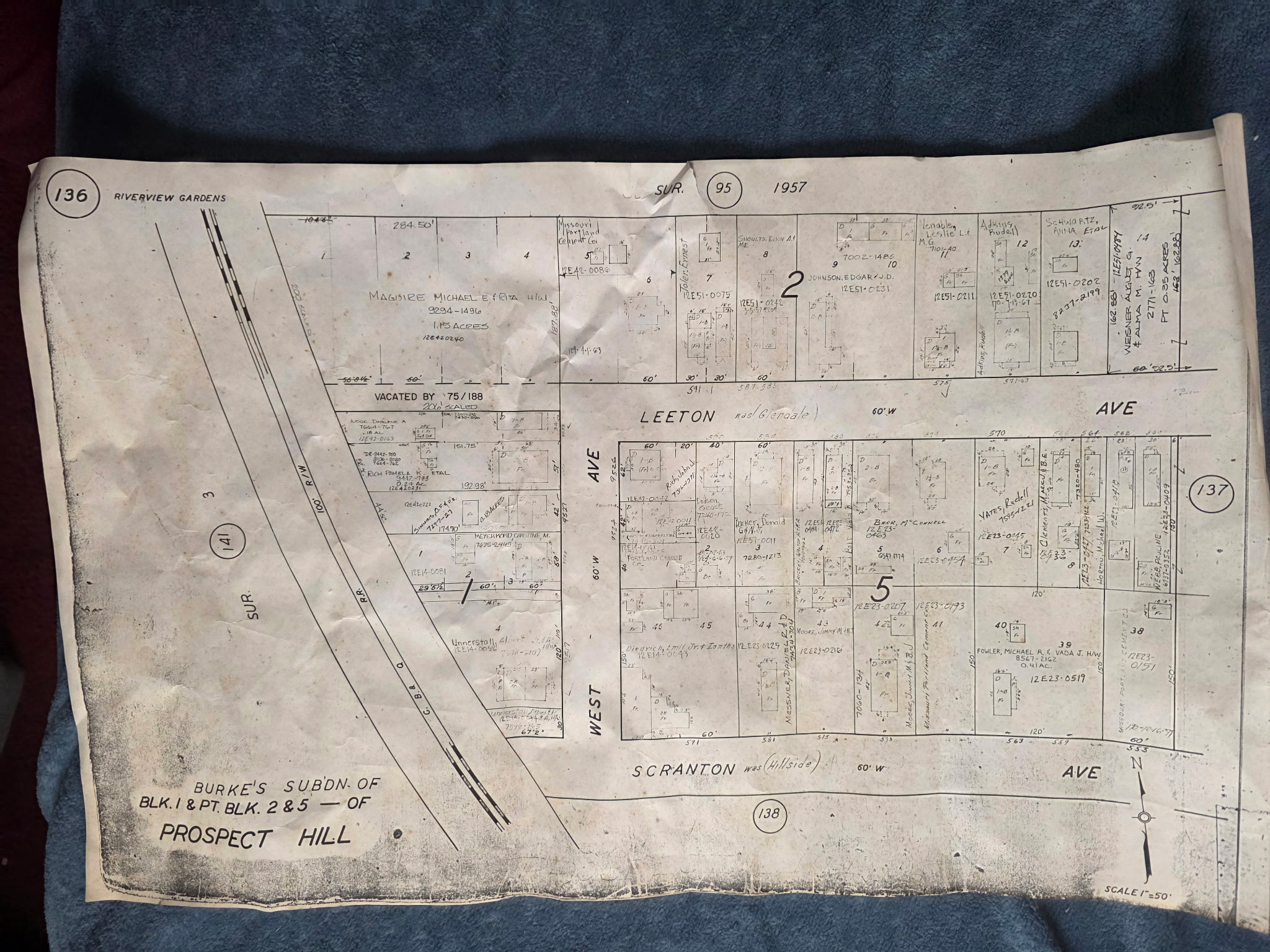
Cementland is currently privately owned by a trucking company, and I think they want to make it into some sort of parking lot. Could going to Cementland be qualified as trespassing?
Andrew Russek:
Technically, yeah. But the first question is, who owns the trespass property? If it goes to trial, you would need somebody to come in and say, "I own that property. This is my property line, and this person being prosecuted doesn't have permission to cross that line." So if you have a property that is owned by some person in Indiana that is just the owner because their name is on the LLC as an agent of the company, you're less likely to see prosecution there.
If they live on the property and see people coming and going, the cops still have to find somebody to actually say, "You don't have permission." Even if they already kind of know it, they would have to have a witness who could come testify. Is it worth it to the police to contact that person rather than just kick you out? And does that person really care? Obviously they may have a liability concern, but are they going to do much more than just put up a higher fence? Are they actually going to seek prosecution? Are they going to get out to a municipal trial here in the City of St. Louis and waste their day testifying that you don't have permission to be there?
Danya Gerasimova:
Does the property owner have to initiate trespassing charges or can local authorities do it too?
Andrew Russek:
Local authorities can do it, but they have to have the property owner say that you're not allowed to be on the property. If they catch you at two in the morning with your camera and your backpack, you may have permission for all they know. They have to prove that you don't.
Danya Gerasimova:
We run a website hosting a database of images and interviews that show people going to Cementland. Can these online photos and interviews be used either to initiate or support trespassing charges?
Andrew Russek:
I think it'd be tough. A, they'd have to know who took the picture. B, they'd have to know when, because of the statute of limitations. If there's no metadata on the photo, you could say you took the photo 13 months ago, and they can't do anything. And again, resources. Are the cops really going to investigate that hard for what is essentially a private citizen's concern? Assuming there are no other nuisances at Cementland, people aren't being hurt, and there's not rampant drug use, the cops aren't going to worry themselves. It's the job of the owners of Cementland to make the property impenetrable if they don't want people on it.
If they get a call, they'll go out to it cause it's their duty. Are they going to be proactive in trying to locate who took what picture and what time they took it? Can they even prove that just because I uploaded the picture, it means I was there when I took it? Can they even prove it's actually Cementland and not something that kind of looks like it? It's not that easy to prove. You have to prove beyond a reasonable doubt that you were on the property, you were on it on a day that falls within that statute of limitations, and that you didn't have permission to be on the property. So no, I think I'd be surprised if they technically could. There's probably some hypothetical situation where they could, but I'd be amazed if they tried.
Danya Gerasimova:
Cementland is half in St. Louis City and half in the City of Riverview in the County. Do city ordinances regarding trespass vary between St. Louis City and various small County municipalities like Riverview?
Andrew Russek:
They can, but 99% of city ordinances just copy the Missouri statute verbatim. Most likely, trespassing between those two municipalities is going to be the same as state trespassing.
Danya Gerasimova:
Could Cementland property owners take any sort of legal action against our project itself for facilitating a discussion of trespassing to Cementland? Do you think there is any particular disclaimer we should display?
Andrew Russek:
As long as you're not encouraging people or somehow making them more able to trespass, I don't think so. It's freedom of speech. You're all allowed to have freedom of association. People comment on alleged illegal activity all the time on Twitter, Reddit, Instagram. As long as you're not encouraging or facilitating, I don't know how they would criminally charge you. Disclaimer wise, you may want to put on something saying you don't encourage criminal conduct.
Could the trucking company try to get you civilly? Even then, you have to do something more proactive than just have a forum for people to post their pictures or stories about their journey through Cementland that may happen to have been via trespass.