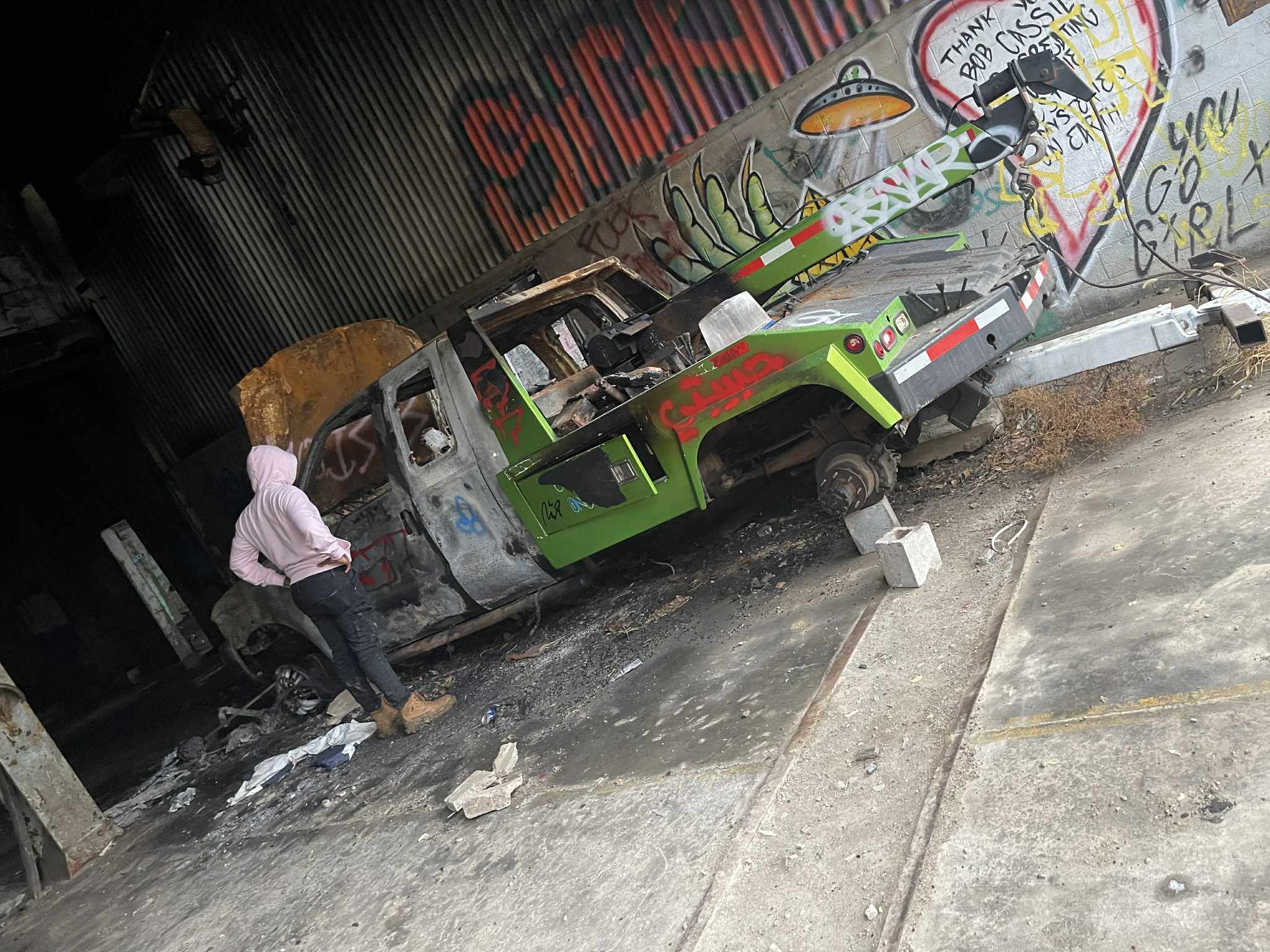
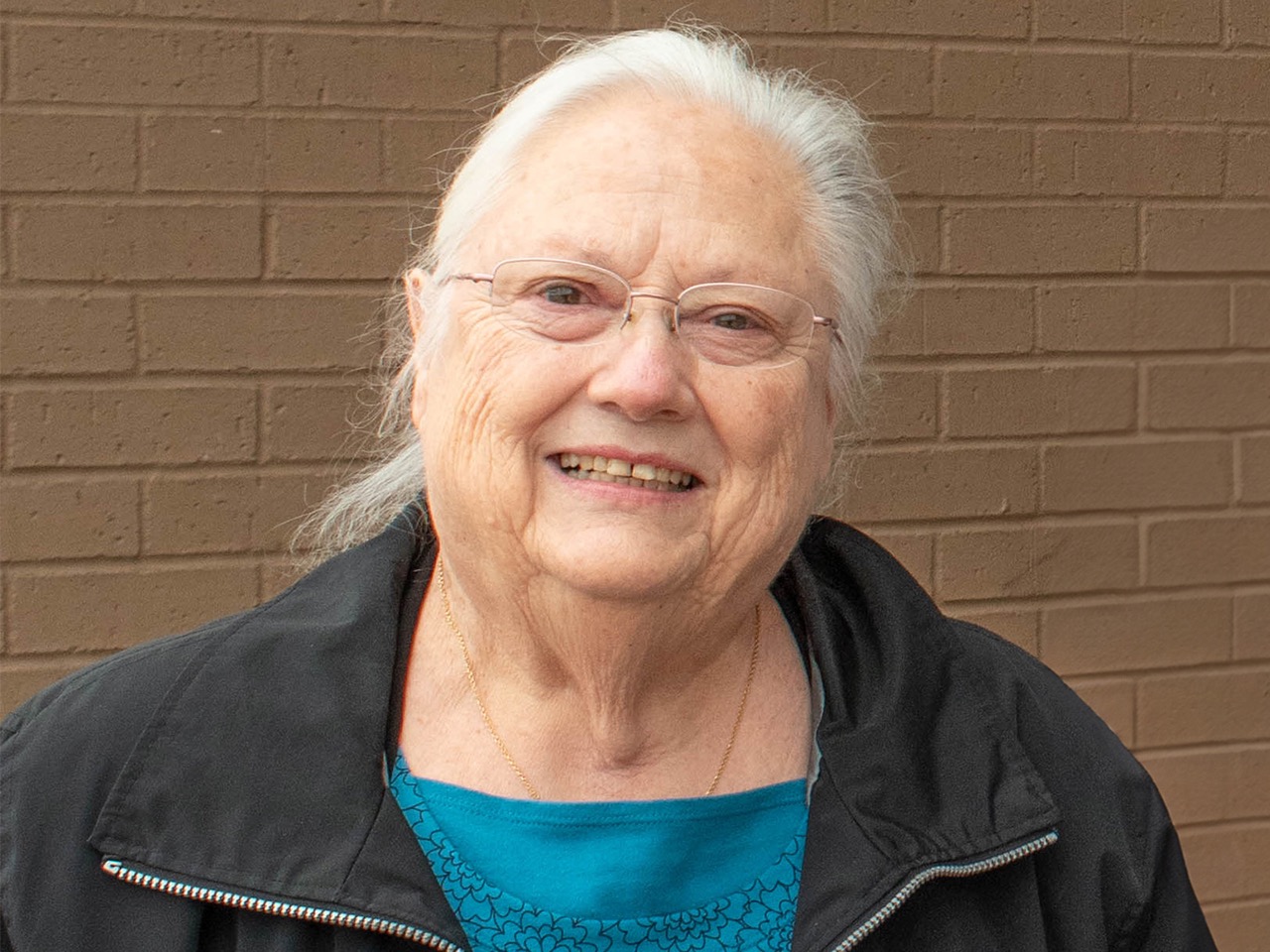
Interview with Lynne Smith, 2025
This work is licensed under CC BY-NC 4.0


You may adapt, copy, and redistribute this material in any medium or format for noncommercial purposes, but you must credit the contributor(s) and Cementland Archive, include the above license information, and indicate if changes were made.

NO ALTERATION
11.14.25
National Building Arts Center in Sauget, IL
Conversation with Ava Richards and Danya Gerasimova
Edited by Ava Richards and Lynne Smith
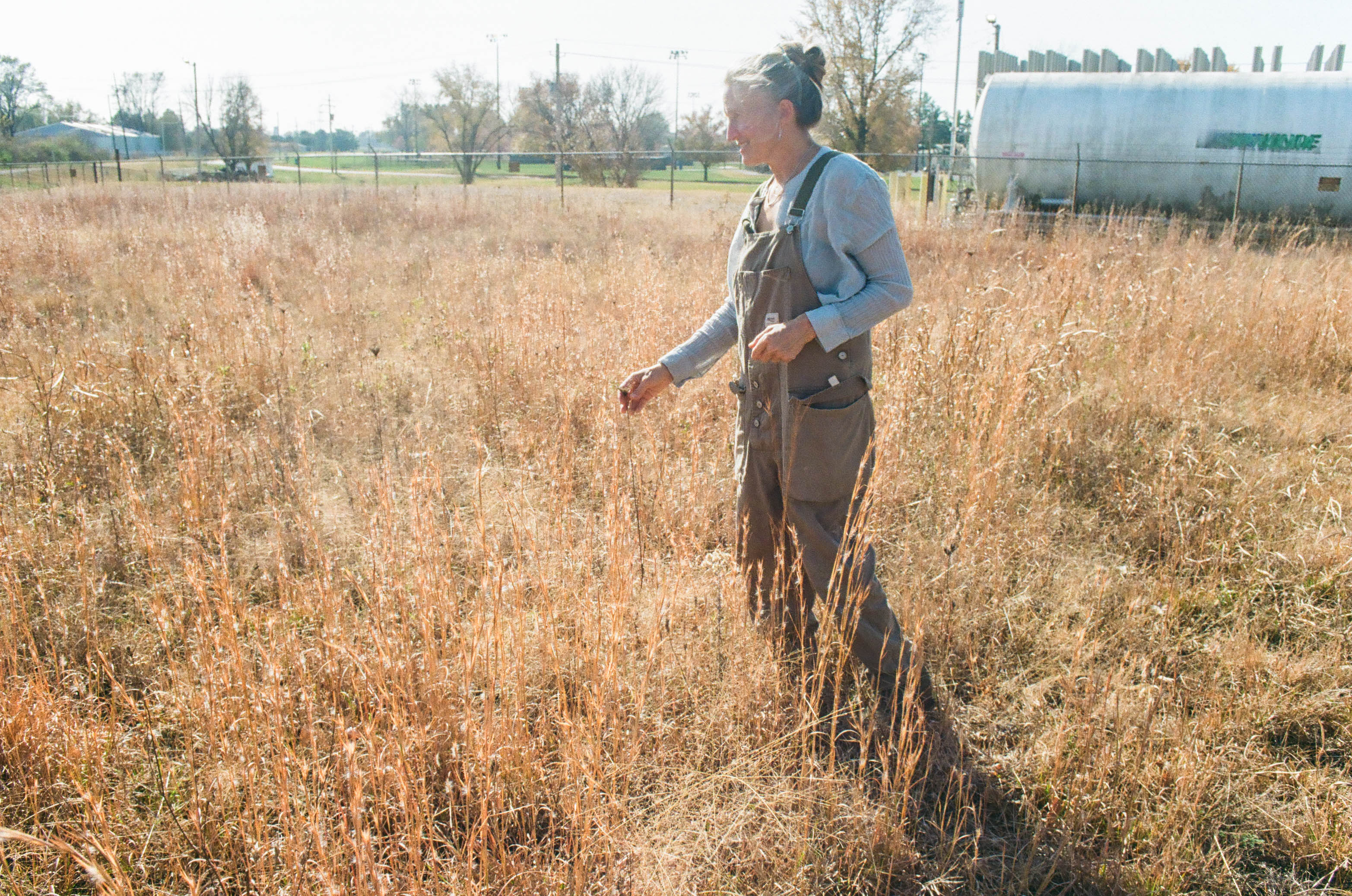
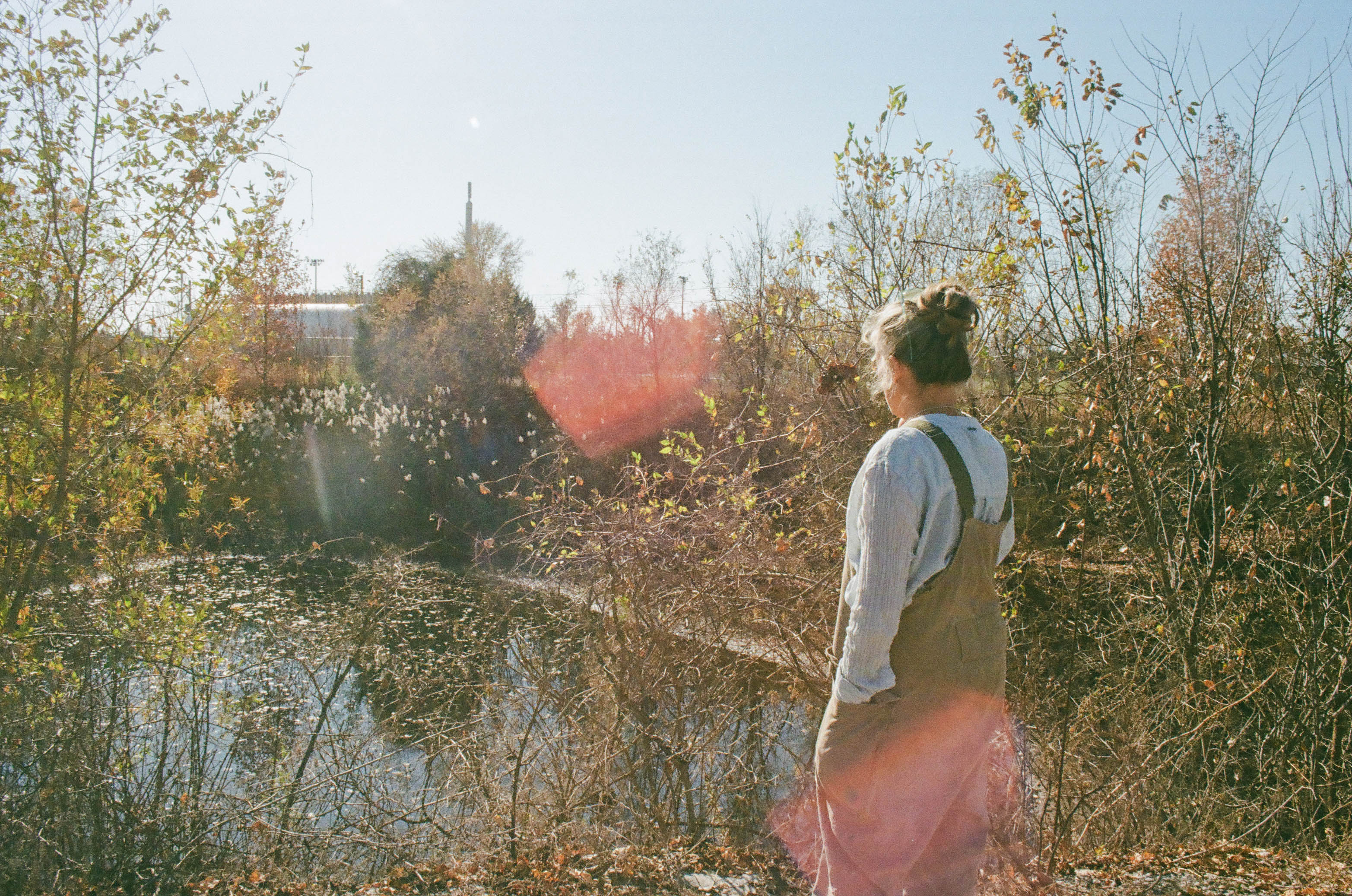
Lynne Smith is an interdisciplinary artist, designer, and educator. Her practice includes an ongoing engagement with a retention pond on the premises of the National Building Arts Center, a former factory housing an architectural salvage archive in Sauget, Illinois.
Danya Gerasimova:
First, can you say a few words about your practice?
Lynne Smith:
I'm an artist, designer, and educator. I weave between lanes to follow my curiosity. Site-based work offers a portal to other forms of knowledge, which has been exciting about my work here at the National Building Arts Center. Sauget is a very complex place, and a good one to root into accumulations and entanglements.
Danya Gerasimova:
Can you expand a little bit more on this specific ‘site-within-a-site’ that we're at right now, as well as what drew you here?
Lynne Smith:
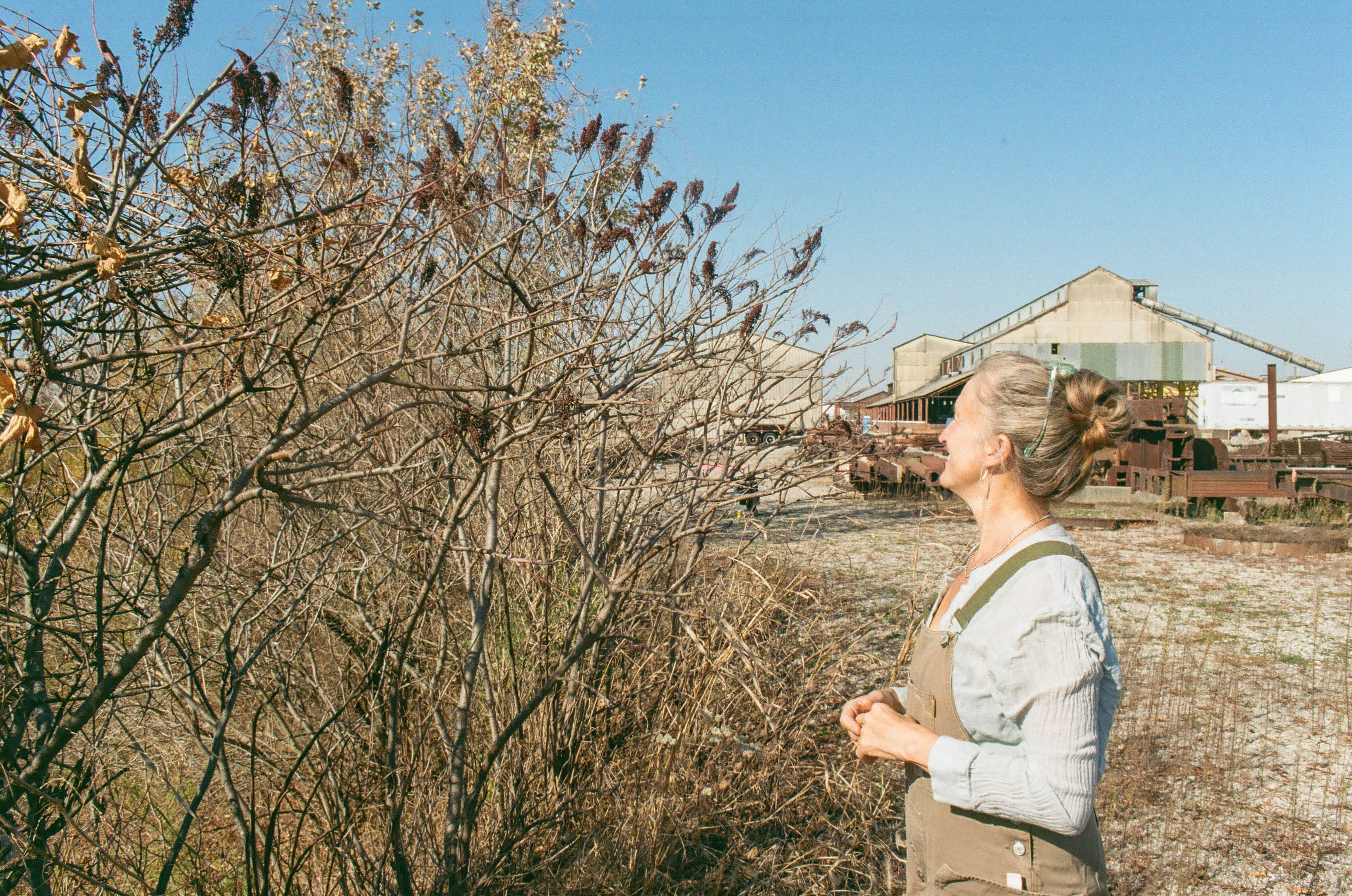
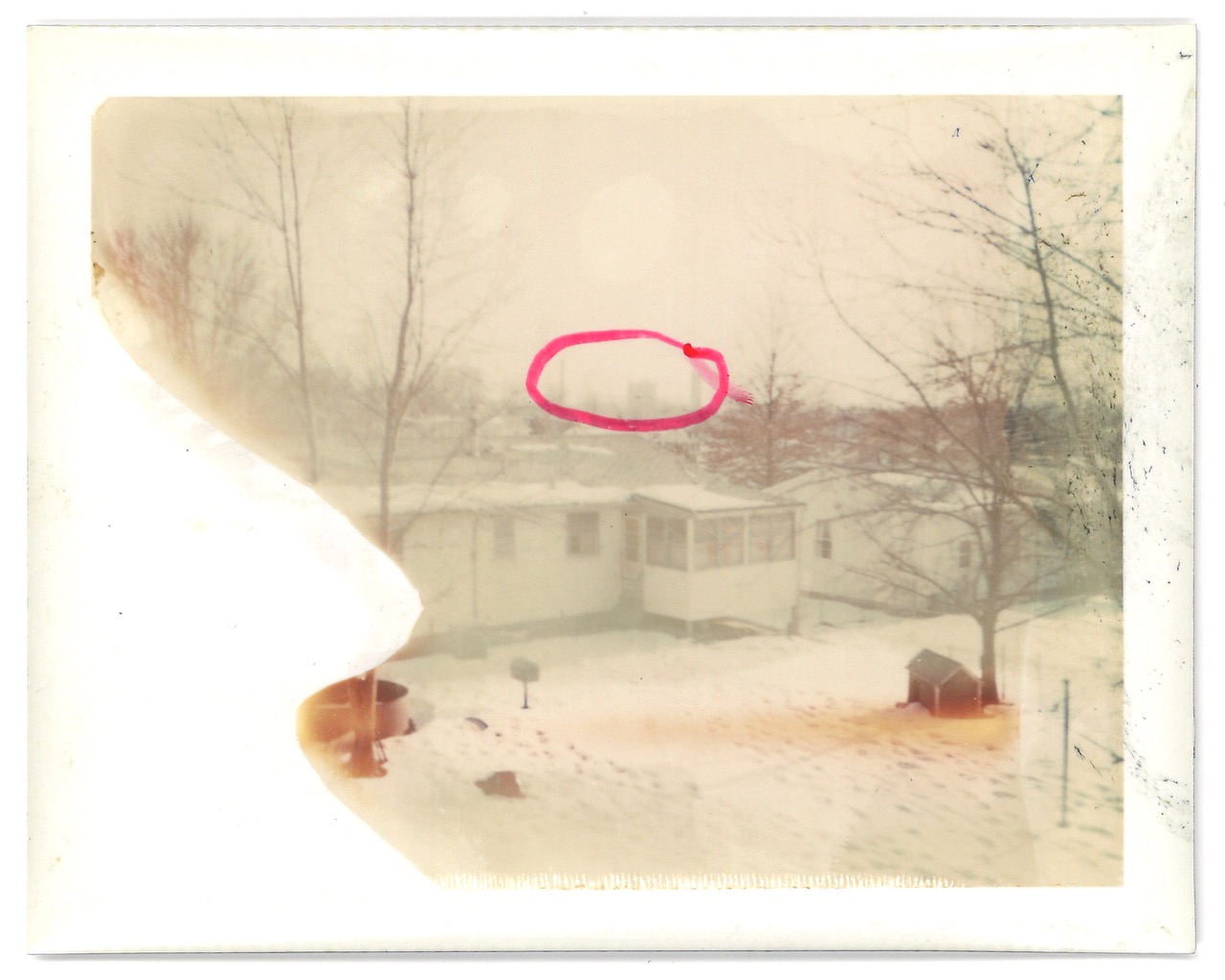
I discovered the pond while foraging to make a weaving for NONSTNDRD’s inaugural exhibition. In the fall, I returned to harvest sumac berries for ongoing work. My interest deepened when I returned on a sub-zero day in January 2024—the pond was empty, and the ground was frozen. Detritus littered the basin: grinding discs, chunks of rusty iron, and bronze and turquoise-colored slag.
I wanted to continue my material research with a focus on the pond. I proposed removing the detritus from the basin to understand the material histories of the foundry, to contribute to the archive, and offer a healing gesture towards the landscape.
Site-within-a-site is a term I use to describe the pond; it has a lush ruderal border that buffers the body of water, so it often goes unnoticed, even when visitors are exploring the immediately adjacent cast iron collection. The Luminary Futures Fund grant helped kickstart the project. One of my collaborators, the Fowler-Finn Lab, made it possible to hear insect songs that are otherwise imperceptible to humans. This shifted my process and trajectory (as did poison ivy)—I needed to slow my approach and observe rather than impose myself on the landscape.
Danya Gerasimova:
I have a few questions about both the detritus engagement side of your practice and about your engagement with the natural landscape and the insects. But first, I wanted to introduce why I think it's important to talk about the National Building Arts Center in relation to Cementland.
We had a really good interview with [the former directori of the National Building Arts Center] Michael Allen about a year ago. We actually went to Cementland together, and a lot of really interesting comparisons between the National Building Arts Center and Cementland emerged from that conversation. How do these projects approach architectural preservation and reuse differently? How does each project reflect the biases within architectural preservation? What seems worth preserving and what seems less worth preserving? What view of labor history does each project embody? Before we started recording, you mentioned going to Cementland yourself. Can you talk a little bit about your visit?
Lynne Smith:
Cementland is a beautiful place. There's so much vegetation on the mounds, and it has some of the same plant species—I mostly remember the sumac. The visual and ecological texture felt very similar.
The structures are also covered with transite, a cementitious material. There's also ruderal growth—meaning, plants that grow on waste. But Cementland has an eerie emptiness that differs from the National Building Arts Center. It is very still, with an underlying hum of the ghosts of industry. The structures at Cementland are empty, whereas those at NBAC are filled with the archive Larry Giles accumulated. Preservation activates the NBAC site; energy and labor are embedded in every artifact.
Have you ever visited the Pillsbury factory in Springfield?
Danya Gerasimova:
I haven't.
Lynne Smith:
I don't know if they've started demolition yet, but it's another place that just stopped and became frozen in time. It attracts animals and people who drift through and occupy the site. There's this really strange energy baked into these sites from labor and industry. Nature is always right at the margins.
Danya Gerasimova:
At Cementland, the relationship between the built environment and the natural environment was, to a large degree, the result of a direct intervention by Bob Cassilly. Part of it was symbolically staging the takeover of nature by building these mounds, digging the canals. It conveys a very dualistic narrative of industry versus nature. Cassilly referred to it as a “morality play.” In the process of staging this symbolic takeover of nature, he remediated the site to an extent by adding waterways, soil, and plants. How do you see the relationship between the natural environment and the built environment here at the National Building Arts Center, and how do you see your intervention through what you call “reverse extraction” at the pond relating to both environments?
Lynne Smith:
That's a really good question, and it's a complicated one to answer. The process of “reverse extraction” is an archival activity and was also intended as an initial healing gesture toward the landscape. The material detritus has a direct relationship to the former foundry and to the built environment, as both materials share a connection to land. The sand in the basin was extracted from the river; sand is also in brick and terracotta in the collection, and was used for casting. Iron was essential for casting large machine parts, but it is also present in the architectural columns. The pond retains stormwater, which filters through the sandy basin to groundwater, which travels over and under the built environment.
I now feel like some of my original intentions were performative, because I didn't know what I didn't know. The Luminary grant provided the support to start dipping my toe into what it means to engage with a post-industrial landscape. I learned that there's an ecosystem here that is already doing work, and I want to give a lot of credit to the intelligence of plants. I know that it's complicated to have a plant like Phragmites australis in the pond because it is incredibly invasive. But it also has beneficial capabilities like phytoremediation—it can filter and extract contaminants from the soil like heavy metals, even PCBs. The roots filter and degrade, and the stalks absorb, but the biomass must be harvested. Management would take considerable labor regardless of the plant species.
There is industrial occupation and pollution all along the river corridor, and St. Louis has one of the worst pollution ratings in the US. I mean, we're right in the middle of Sauget, where adjacency to Superfund sites makes intervention more complex; there is contamination everywhere in the land, water, and air.
Yet, there are Blanchard's cricket frogs that live in the pond. They like to hang out at the edge of the water because it's warm. They're amphibians, so their skin is permeable, yet they're finding a way to be resilient and survive. I think of the pond as an oasis, because it offers water and an abundant ecosystem. But I also know it's contaminated with the waste of industry, so I tread lightly. It also makes me think about strategies for supporting the abundance that is already present. When you come out of the micro view of the pond, you're still in Sauget, and it's hard to know if anything you do is going to help. But the goal is to make a positive contribution to the landscape. If everyone just kept turning their back on brownfields and Cementlands, places that were once occupied by industry, does anything ever change? How can artists, scientists, and indigenous perspectives help us reconsider how to engage with the land?
Danya Gerasimova:
Yeah. What's your sense of how the pond was formed and how this ecosystem began?
Lynne Smith:
This whole area that we're sitting in, from where all these columns and trusses are to the pond, is labeled “deep pit” on the site map from 1951. In USGS photos between 1952 and 1968, the pond appeared shallower. So there was probably regrading and settling. The vegetation around the perimeter became more defined in the late ‘60s. The pond was receiving stormwater, versus direct precipitation only, which sustained that kind of growth. Does that make sense?
Danya Gerasimova:
Yeah!
Lynne Smith:
It was a pit that morphed into a pond.
There are similarities in the pond’s slow ecological evolution and the adjacent (formerly Exxon) parcel. Aerial photos show how the circular footprints from decommissioned tanks were slowly covered by growth, not over years, but decades. Even if the land is full of what is considered “invasive,” it is still a forest. It is living and supporting wildlife.
Danya Gerasimova:
Why do you think it's important for humans occupying this land now to steward this ecosystem and engage with it? Do you think that just letting nature do its thing is enough, or is some sort of stewardship necessary?
Lynne Smith:
That's a really good question. To be honest, I wrestle with that question a lot. What is the right thing to do? What does it mean for me to be on this land that isn't mine? Will a small drop in a tiny pond make a difference?
Phragmites is an interesting example: It is not native and is considered a “colonizer species.” This whole country was colonized, so whether the plant came by bird, boat, or in someone's satchel, it traveled, as many humans did, to this Indigenous and industrial landscape. Phragmites is very frowned upon because it eliminates biodiversity. I completely get that, and I support bringing things into balance. It's worth noting how the plant outcompetes us—it is pushing back against an area known for contamination. We've created situations of great imbalance. I orient toward the plurality of these conditions.
Ava Richards:
It's something we've been thinking about too, in a sort of different way. We joke about it when we're at Cementland, but sometimes we'll have ideas about things to do there, and we're like, "Oh, is this polluting the sample?" But yeah, it's just interesting to think about because there are a lot of native plants at Cementland as well, and then there are a lot of invasive species. It's interesting to think about the things that we could possibly do to alter or impact the space. We wonder where the line is between letting it do its thing versus intervening in some way?
Lynne Smith:
A hundred percent. I mean, I'm sure scientists and others operating in very progressive lanes of ecology and landscape architecture may cringe at this idea. But I think it's important to consider. We want to push and pull to control what's happening in the land.
I'm curious about Cementland. When you talked about remediation, what does that look like out there? Are you actively exploring what's happening? Are you doing soil sampling?
Ava Richards:
We're interested in soil sampling. I don't think we really know how to do that. So we're looking into it, but we've been collecting plants. We have a plant press that we've been working on. We're collecting and indexing as many plants as we can, and also indexing what wildlife we see out there.
Lynne Smith:
It sounds like your process is really similar.
Danya Gerasimova:
In a lot of ways.
We've also interviewed folks who worked with Bob Cassilly on Cementland. One of them told us that before Cassilly engaged with the site, birds wouldn't fly over it. Once he altered the landscape there, the birds apparently returned. Going today, we do see a lot of birds that habitate there. He did plant trees and maybe create more opportunities for a wetland to form. I don't know if you've ventured out by the smoke stack, where there is a pond area.
Lynne Smith:
I did, yes. There was a board, I think, and I wobbled across. There were a lot of cattails. It's beautiful.
Danya Gerasimova:
It used to be much more flooded.
Ava Richards:
We recently noticed goldfish in one of the ponds that somebody put in there. I love that so much and find it so interesting.
Lynne Smith:
What? Wow! One day, I used a stick to remove a ceramic tube sticking out of the water. It was close enough to the edge, and as I lifted the object to bring it to the shore, a giant red crayfish slipped out. I was shocked at first. And then... I don't know how you feel when you're out on the site exploring…It makes me feel like a child—engaging with the landscape in a way I know I had lost touch with. Being curious as an artist has connected me to the land. I used to feel this connection when I would rock climb. Generally, people go “out” into nature for recreation or respite. There’s a separation or otherness we’ve constructed that is felt through our relationship to architecture and urban infrastructures.
Danya Gerasimova:
I definitely feel that way. And back to your question about remediation, I think there is also a side to Cassilly’s remediation that’s just performative. He created all of those mounds with dirty fill. He just had a ton of garbage trucks dumping random construction debris in there.
Danya Gerasimova:
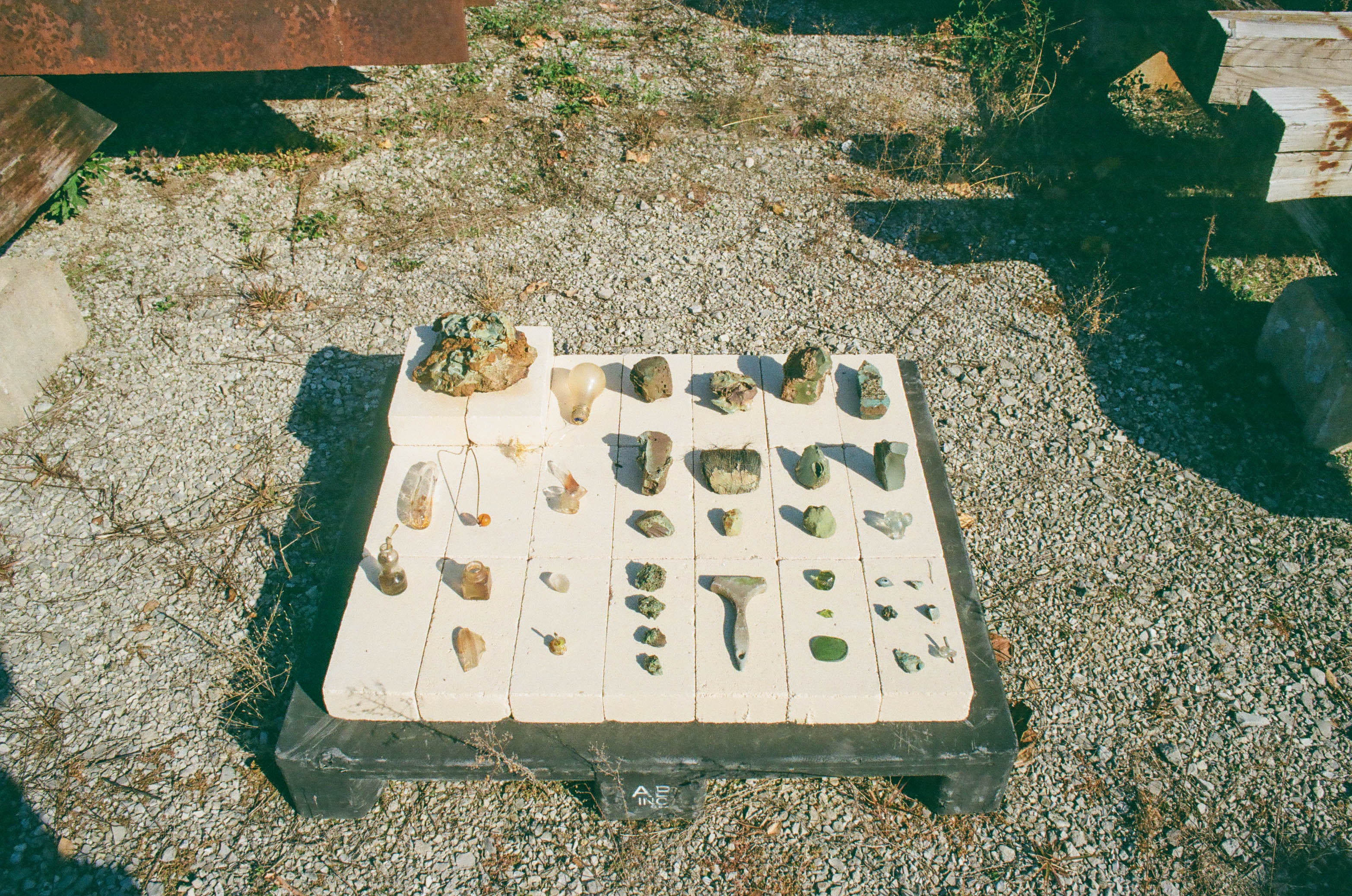
I wanted to talk a little bit more about your work with the detritus in the pond and how that side of your engagement connects to both the National Building Arts Center and Cementland. Both Cementland and the National Building Arts Center emerged from this salvage economy in St. Louis. That economy feels like a uniquely significant part of St. Louis history, considering the city's size. Do you reflect on participating in this economy of reassigning value to abject architectural and industrial matter when you exhibit the detritus you get from the pond next to the National Building Arts Center collection?
Lynne Smith:
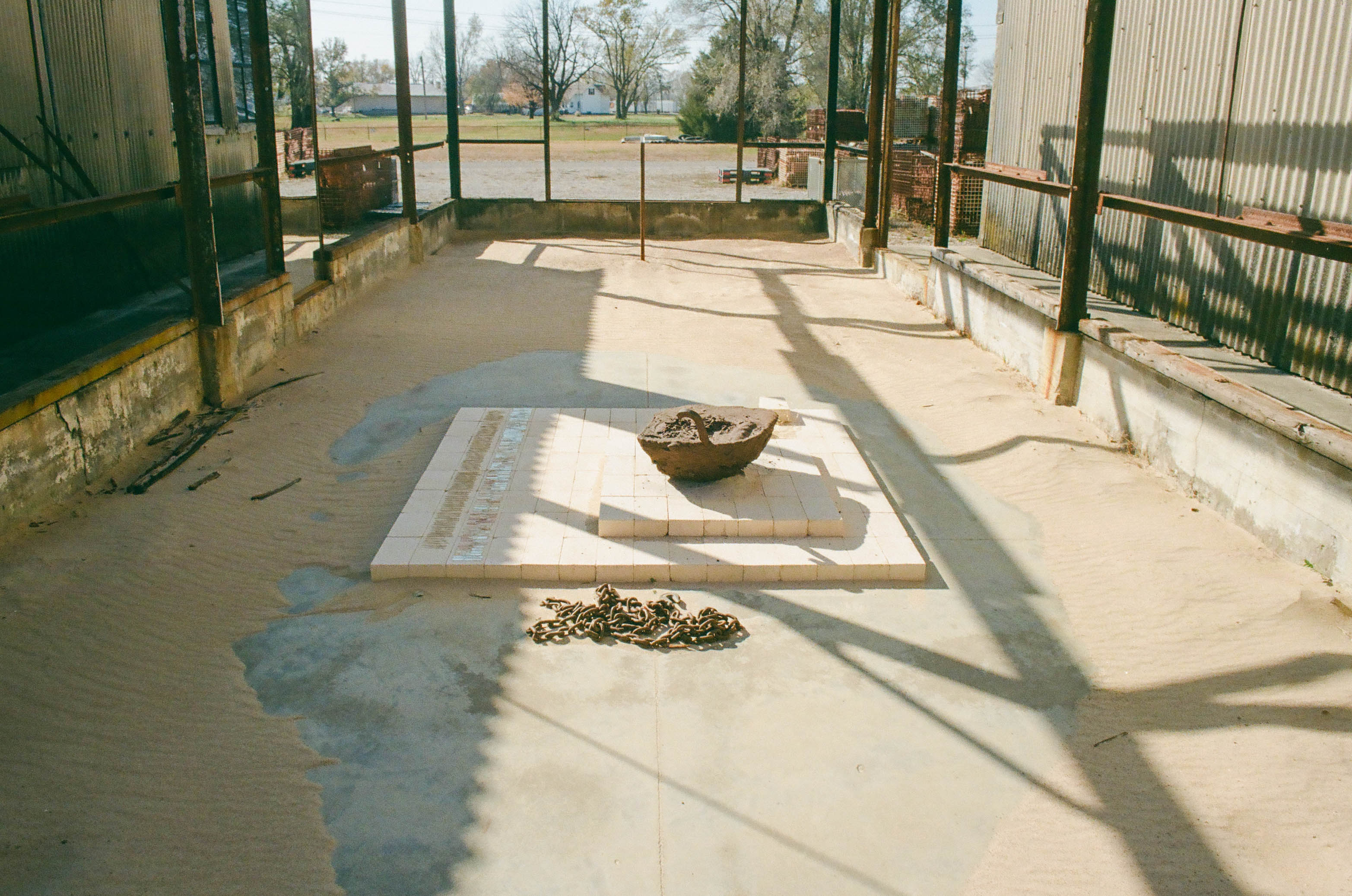
It's interesting to hear the word economy, as I don’t think of the detritus in traditional economic terms. I intentionally display the iron cast-offs next to the cast-iron columns. The palettes are really beautiful, and they're in harmony because they're made of the same material. Yet a tension exists because they are different artifacts of a similar process. I’m intrigued by what we choose to elevate and preserve, and what's considered valuable. If these columns were not architectural, they might not have been saved; somebody might be looking at them for the value of the metal. There will come a time when we will run out of materials from the earth. Iron/steel may not be one of them, but it's interesting to think about what is extracted and what has value, especially when we're in a different time of natural resources.
Danya Gerasimova:
Well, I think there is kind of a commodity economy around it even now. There was an architectural salvage ecosystem around Cassilly and Cementland. After Cassilly's passing, we know from interviews and sightings that a ton of people raided Cementland for the building materials and metal accumulated there. There are some really expensive building materials still stacked there.
Ava Richards:
We went with my friend, who's a stone mason and a carpenter, and we were looking around near the area that has a bunch of building materials piled up. There are stacks of materials like 1,500-pound pieces of granite and marble. There are some really nice stones that I think most people wouldn’t even notice or think about the value of. My stone mason friend was so excited about it.
Lynne Smith:
I did see some of those. People are collecting and storing materials in various places along the river. Limestone and granite are piled like waste. They were collected but are now rather hopelessly awaiting reuse.
Danya Gerasimova:
Some materials definitely travel down the river too, especially brick and reclaimed timber. That's part of this salvage world that used to be more active in the ‘90s and ‘00s when Giles and Cassilly were working.
Lynne Smith:
Did you get to meet Larry?
Danya Gerasimova:
No.
Lynne Smith:
I didn't get to meet Larry either. I think about him a lot when working here.
Danya Gerasimova:
How are you responding to his stewardship of this space?
Lynne Smith:
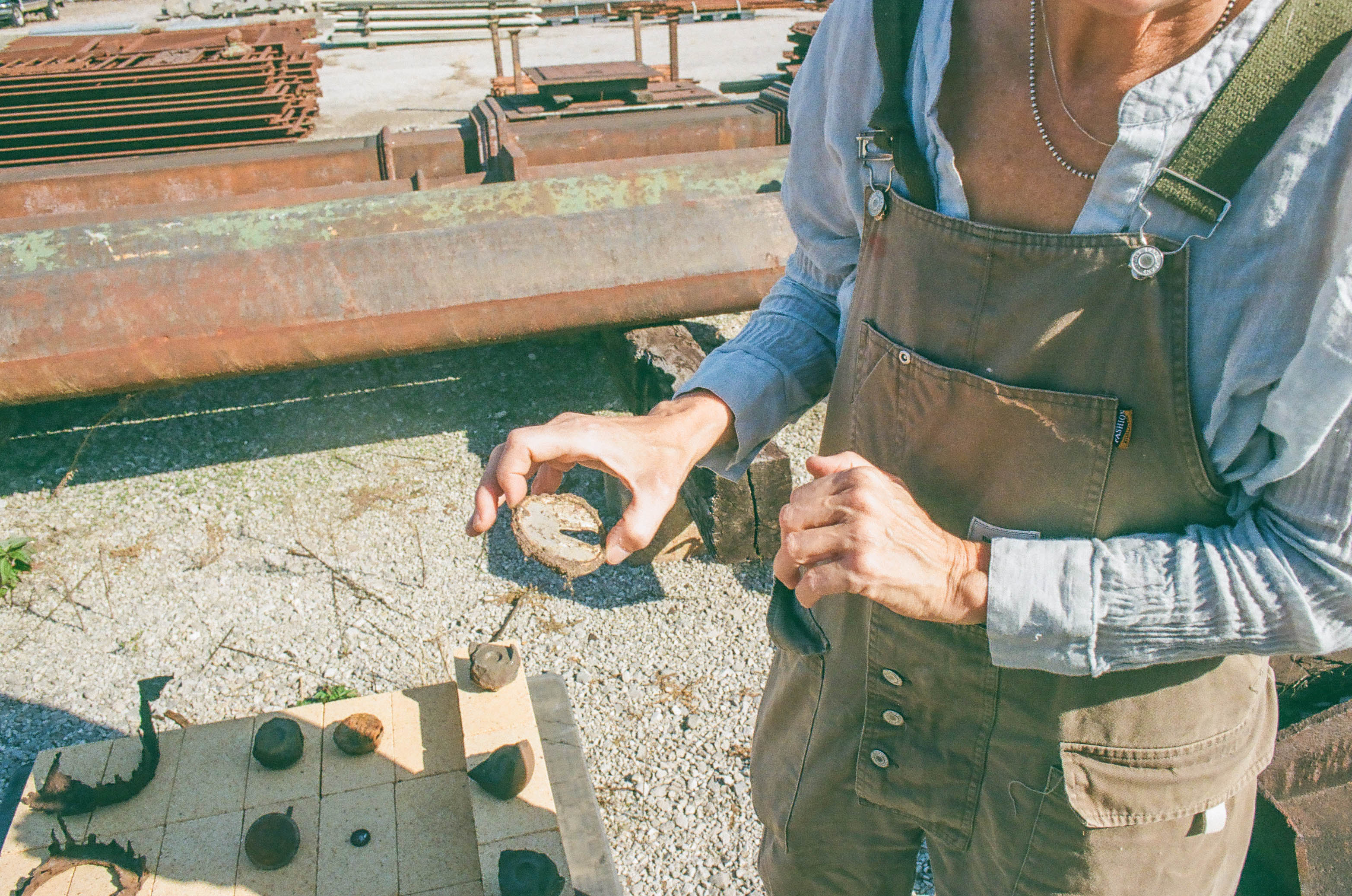
I am constantly in awe of how much will, energy, time, and expertise it must have taken to collect what represents the NBAC collection. There are pictures of Larry in the office and the archive, and there’s one where he’s hanging out in the hole of a building, which makes me think of Gordon Matta Clark, who called himself an “anarchitect.” What is so impressive is the scale at which he was working. It involved rigging, scaffolding, cranes, and probably coaxing people to come and help. It takes care and skill to build something, and it's even harder to pry materials free from other materials so they remain whole and are considered worthy of preservation and viewing. I see that effort as requiring high expertise. It takes drive, energy, commitment, and care to save these things.
The accumulation of labor here is incredible and palpable. There's the labor of Larry and others who worked to salvage everything in the collection. Then there's labor embedded in the creation of each material or artifact. There are visible fingerprints on the backs of molds. Larry made all of the wooden crates that store objects in the collection. The effort is massive. Accumulation relates to labor, but also to industry, and contamination in the surrounding landscape.
There is an element of stewardship in my work at the pond. While cleaning the detritus from the basin has archival and artistic value, the real stewardship thus far is rooted in acknowledgment. Bringing attention to the resilience of insects, plants, and frogs living in and around the pond has value. Amplifying the voices and presence of these entities feels important in the broader context of the industrial landscape and the history of Sauget. They persist despite human activity and ongoing occupation.
A meaningful ecological intervention will require significant labor. Undoing what industry imposed upon the land is complicated, if even possible. I am reconciling the limits of my knowledge and also acknowledging how it has expanded as I think about contribution and engagement.
Danya Gerasimova:
Can you talk about your sound recording on-site? I'm wondering about both what exactly you're doing with that and how amplifying the sounds we don't typically hear changes your perception when you're working and exploring around the pond.
Lynne Smith:
The collaboration with the Fowler-Finn Lab was profound—it shifted my orientation and desire to celebrate the resilience of entities like plants, insects, amphibians, and birds that exist and persist despite human activities. I don't know what it's like to be in the body of a bird—to fly above and see what we're doing and how we're behaving on the land. But I think about that now. I think it's very difficult to tune into this perspective when you're driving through Sauget. This was only accessible through sustained attention—after witnessing tiny jumping spiders on clover leaves and seeing frogs shoot out of the mud when they feel the vibration of my footsteps.
I took a step back from imposing preconceived ideas I held as an artist onto the site. What was here asked me to bear witness. It was profound to hear a level of communication that humans don't perceive. Plants also make vibrations. How are they communicating in ways that we can't understand? How are they mobilizing? When might I be interrupting something that the plants are doing that might be useful? I like to give them the benefit of the doubt. Do you feel that way when you're out at Cementland?
Danya Gerasimova:
Yeah, definitely. Are you working with the plants currently? Are you harvesting or making dyes?
Lynne Smith:
I am working with Phragmites in my studio now. I used sumac from the pond to dye fiber I’ve used in weavings—I have more in my refrigerator in ziplock bags. Plants absorb what's in the soil, some more than others. I think twice now about what I'm going to boil in a pot on my kitchen stove. If there's heavy metal in part of the plant, I don't want to vaporize it in my kitchen. Bringing a naive energy and curiosity to stimulate change can be useful, but I’m tempering this with safety and care. What does the site need? What does the site host need? What does it cost? It’s a long-term commitment to tend to the land.
I look at the adjacent forest all the time; I hear hawks and cicadas. It's compelling because it has evolved by neglect. I'm sure it's crawling with “invasives,” but it's pushing up against asphalt covering an EPA Superfund site across the street. So, I often think, “Who is the real invader in this landscape?”
Danya Gerasimova:
One of the things about the National Building Arts Center being in Sauget, in the middle of this industrial land, is that it can be a little tough to get folks out here. How do you approach community engagement? I remember when we were here for your field recording workshop, there was a group of children, which was so lovely to see at the National Building Arts Center. Usually, I feel like the same small group of people attends.
Lynne Smith:
You're right, it's usually artists coming to see artists, or architecture and preservation professionals and enthusiasts. I work part-time at WashU, so I have colleagues and friends who attended. Some of the attendees were families and their kids. I have volunteered at Building Futures in Old North St. Louis. They offer summer design/build programs for kids and Saturday workshops, and they were able to bring a large group of kids and adults in vans. That was awesome. It was exciting to have a new audience at the site. It can be hard to get people to cross the river, even though it is less than 10 miles from most parts of the city. The art/science insect workshop was geared towards a K-8 audience, although it was accessible to all. I hope that adults had fun too.
Ava Richards:
We had a lot of fun!
Lynne Smith:
I will also acknowledge that community engagement was challenging. I don't live in this community, and so I think a lot about that. Plus, it's not my land. I visited East St. Louis and Cahokia Heights public schools and made email and in-person contact with middle school and grade school teachers, but I couldn't provide transportation, and the workshops were on Saturdays. It made me think about alternative ways to offer a similar connection to the landscape at their school, or ways I could partner with existing organizations.
I'm interested in finding ways to mirror these activities elsewhere. I've continued those conversations, but admittedly, it was a challenge. In some ways, it disappointed me, because part of being in a place is contributing to the community. I wanted to offer a positive connection to the landscape that is different from what one experiences day-to-day or in a traditional academic setting. This is what's been so profound to me as an artist and making site-responsive work—being in an outdoor environment allowed me to engage with knowledge in ways I can't immediately access via books.
Ava Richards:
The kids were really interacting a lot with it. They were super excited. It was really cool.
Lynne Smith:
It was really cool. This work has helped me understand how I best learn. In high school, I couldn't comprehend chemistry and I felt I was not good at it. But now, when I get to touch and interact with materials in the context of place, it's a game-changer. It’s exciting to see the kids so engaged.
Lynne Smith:
I'm curious about Cementland. Does somebody own the land now?
Danya Gerasimova:
A trucking company owns it now. They've actually modified the landscape quite a bit. In 2022, when they first purchased it, they took dirt from one of the mounds and filled up a lot of the waterways. It used to be more of a wetland, but they've just kind of been sitting on it. They have the gates open as well.
Ava Richards:
We talk a lot about what their intentions are. I guess the idea is to make it into a big parking lot for semi-trucks. But I just can't imagine that it would be profitable in any way to flatten that space and demolish everything there. That seems much more expensive than any potential profit that they could make. We don't see them doing anything substantial.
Danya Gerasimova:
Yeah, nothing dramatic.
How do you see the trajectory of your work here going forward?
Lynne Smith:
I'm an artist and a designer, not a scientist or ecologist, although I should give myself credit for what I’ve learned through research. I have lots of ideas for continued engagement. I want to do something that supports the landscape or celebrates its inhabitants. But what does the National Building Arts Center need, and what helps this site long-term? I've been thinking about filtration—sand is a natural filter—and about water and local species. Everything on the site is interconnected. What rolls off the roof travels over impervious surfaces, collects pollutants, and eventually drains into the pond.
What supports the Blanchard's cricket frogs and swifts? I’m balancing what I am excited about making, and what I could do that educates and has an impact. Originally, I wanted to drape a weaving across the pond, but then I realized that's just about me. I am interested in something hopeful, regenerative, and supportive, which will take time.
Danya Gerasimova:
Do you envision some sort of point of completion for your engagement, or do you see it as an ongoing project?
Lynne Smith:
It is ongoing. I also feel that if I stopped, I'd be turning my back on what's living here. I don't know if you have that same feeling with Cementland. It sounds like maybe we had a similar experience with how things unfolded.
Ava Richards:
I feel like both of our projects are something that could go on forever as the environments change. But it's also interesting to think about what an endpoint looks like or means within the confines of an artistic space, especially when there's a grant involved. Do you have any sense of what that looks like?
Lynne Smith:
That's a really good question. Stewardship of the land happens over decades—and even deeper time than we typically consider or even understand. And this is also not my land, but I am eager to contribute in meaningful ways over time.
It's liberating to think about what can grow—people with other areas of expertise can also engage and contribute. I feel like a conduit right now. I feel like a filter, too. A lot of my work has been looking, noticing, and slowing down. This is what I've been offering others to do too. I offered public programming in the landscape to create time and space to acknowledge what's here, what's already doing work, and what has been resilient and persistent in this complex place. I feel like if that moment didn’t happen, then I’m just another human coming in and asserting myself on the land. This time and space for understanding of what's rooted here has become really important to me. The summer educational programming and fall exhibition were a great way to close the loop on the initial grant. I planned for a longer trajectory, so my research and engagement remain ongoing.
Danya Gerasimova:
Do you feel like you have learned anything so far from your engagement that is relevant to thinking about damaged post-extraction landscapes more broadly?
Lynne Smith:
There are many dualities in the landscape. I experienced moments of awe when listening to the insects on plants and seeing plants change through the seasons. But then there is a history of contamination. What's here? How does it affect human health?
This site offers a wild, ruderal abundance that makes one forget what's beyond the perimeter of this triangular patch of land. But people live nearby. There are opportunities for the site to be a place for education, for exploring the complexities of the landscape and human health. What can be done to support the site and the communities around us? We're all connected. The air we breathe is connected. Everything's connected. This site offers a place for experimentation and for alternative narratives and interactions—a place for knowledge and transparency, but also hope.
.jpg)
.jpg)
.jpg)
.jpg)